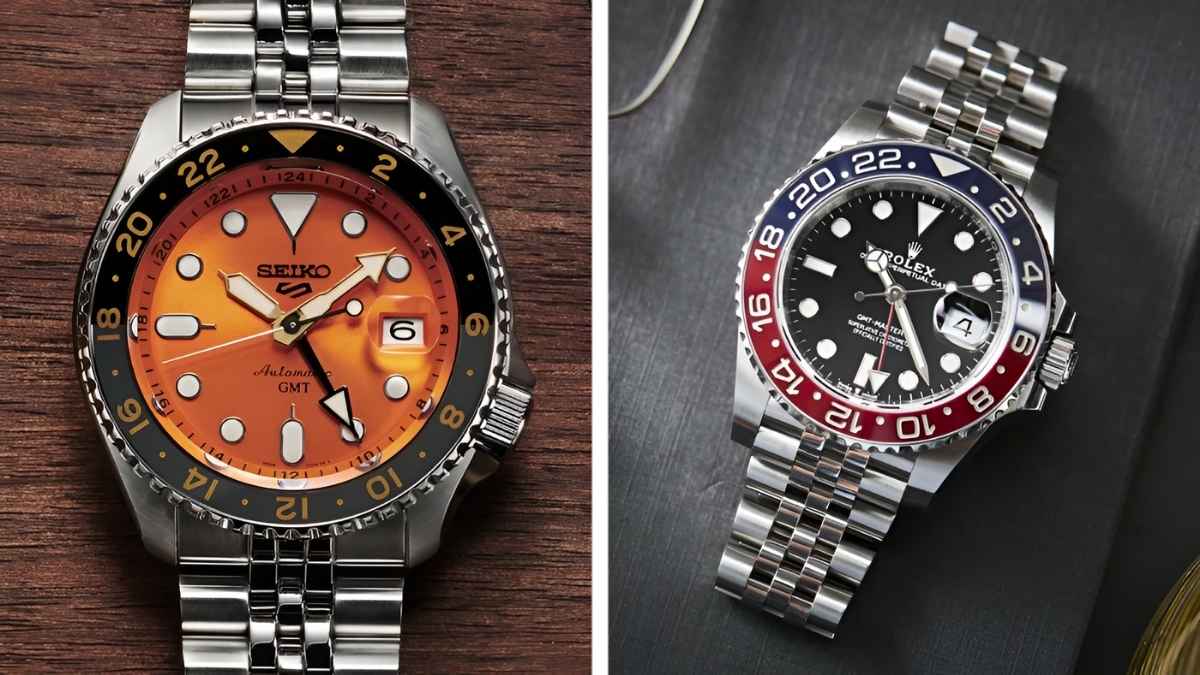
Caller vs Traveller GMT Watches: GMT watches are admired for their ability to track multiple time zones, making them indispensable for travelers, professionals, and enthusiasts who want both functionality and style. However, not all GMT watches operate in the same way. Two main types exist: Caller GMT and Traveller GMT. At first glance, they look similar, but their mechanisms and intended uses differ significantly. Understanding these differences is crucial before deciding which one suits your lifestyle.
What Is a Caller GMT
A Caller GMT, often called an Office GMT, is designed for people who stay in one location but need to monitor another time zone.

- The main hour hand functions like a standard watch and does not jump independently.
- The GMT hand is adjustable, allowing the wearer to set it to a second time zone.
- This makes it ideal for professionals working with colleagues overseas or individuals keeping track of family in another country.
In essence, the Caller GMT prioritizes tracking a remote time zone while keeping local time fixed.
What Is a Traveller GMT
A Traveller GMT, also known as a True GMT or Flyer GMT, is built for people who frequently move across time zones.
- The local hour hand can be adjusted independently in one-hour jumps without stopping the watch.
- The GMT hand remains fixed to home time, ensuring you always know the time back home.
- This feature is particularly useful for pilots, business travelers, or anyone who crosses borders regularly.
The Traveller GMT emphasizes convenience when adjusting to new local times while maintaining a reference to home.
Key Differences Between Caller and Traveller GMT
| Feature | Caller GMT (Office) | Traveller GMT (True/Flyer) |
|---|---|---|
| Local Hour Hand | Fixed, moves normally | Adjustable in one-hour jumps |
| GMT Hand | Adjustable to track remote time | Fixed to home time |
| Best For | Professionals working with overseas contacts | Frequent travelers crossing time zones |
| Ease of Adjustment | Requires resetting GMT hand | Quick local time adjustment |
| Example Use Case | Staying in New York but tracking Tokyo time | Flying from London to New York and adjusting instantly |
How to Choose the Right GMT Watch
Choosing between Caller and Traveller GMT depends on lifestyle and priorities:

- Choose a Caller GMT if you rarely travel but need to monitor another time zone regularly. It is practical for office workers, remote collaborators, and those with family abroad.
- Choose a Traveller GMT if you frequently cross time zones. The ability to adjust local time quickly without disrupting home time makes it the perfect companion for international travel.
Budget and brand preferences also play a role. Traveller GMTs often cost more due to their complex movement, while Caller GMTs are generally more affordable.
Practical Considerations
- Accuracy: Both types are reliable, but Traveller GMTs offer smoother transitions when adjusting local time.
- Cost: Caller GMTs are usually less expensive, making them accessible to more buyers.
- Convenience: Traveller GMTs save time and effort during travel, while Caller GMTs are simpler for daily use at home.
- Aesthetic: Both look similar, with a fourth hand pointing to a 24-hour scale, so the choice is more about function than appearance.
Conclusion
Caller and Traveller GMT watches serve different purposes despite their similar looks. Caller GMTs are perfect for those who stay in one place but need to track another time zone, while Traveller GMTs are tailored for people who frequently move across borders. By understanding how each type works, you can select the GMT watch that best matches your lifestyle, ensuring both practicality and elegance on your wrist.